
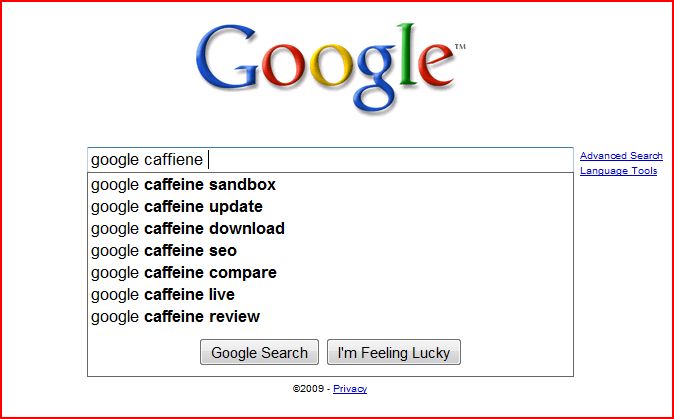
Google has revolutionized search engine optimization (SEO) and now Google is just completing a major overhaul of its index and algorithm to become what was mentioned in previous posts as Google “Caffeine.” This new search result process is going to determine where your site ranks among the rest of the search results. Webmasters and site owners can expect Caffeine to release after the holiday season.
Google was kind enough to release a beta for webmasters this past summer to test out Caffeine. One of the aspects that determines page ranking factor is ‘site speed’, or how fast your site loads. Another aspect for page ranking is ‘broken links,’ as in the more you have, the lower your page rank. With that being said, the ‘Over-All Page Quality’ will almost determine how well your page ranks among other comparable search results. The ‘Over-All Page Quality’, or ‘OnPage Factors’, include SEO-friendly page design; good navigation; title, meta, and alt tags; acceptable keyword density; bounce rate; site traffic; social bookmarks from Facebook, Digg, etc.; and time spent on the page.
‘Social BookMarking’ refers to the number of social bookmarks a page receives. As I briefly mentioned in one of my previous posts, the new algorithm will be indexing social media tools such Twitter, Facebook, Diggs, etc. Simply put, the more tweets or diggs you have, the higher your page will be ranked. This may one of the answers to link-buying practices: while it’s easy for someone with a huge budget to buy a thousand or even thousands of links to get to the top of a search page, it is much harder to get a thousand Diggs or “Likes” on Facebook. However, you shouldn’t rely strictly on social bookmarking. Your page ranking is still being determined by factors such as reputation, age of site, traffic numbers, and the over-all page quality.
One confusing aspect about Caffeine is the ranking power on ‘keyworded domains’. The question is if these domains will be ranked higher when searched for. Webmasters already know that domain names that contain major/general keywords will help rank them high among organic search results. However, Google’s different search engine result pages (SERPs), such as info, video, news, shopping, and corporate listings, may have a bigger role in organic SERPs in regards to domain name and onsite factors.
With that being said, what do you think? Do you think you will be able to master the new algorithm and be able to be among the top 10 ranked for that particular search?
Written by Chris C.