
Search engine optimization has always been a moving target.
One year, marketers focus on keywords. Next year, user experience will become the priority. Then Google introduces another update that changes how websites earn visibility.
Now, AI is changing the SEO landscape again.
The difference is that AI is not simply affecting search results. It is becoming part of the optimization process itself. Businesses can now use AI to uncover opportunities, identify content gaps, predict ranking trends, and improve website performance faster than traditional methods allow.
For marketing teams managing hundreds or thousands of pages, that shift is significant.
The organizations gaining visibility today are not replacing SEO professionals with AI. They are using AI to help experts make better decisions.
The result is faster analysis, stronger content strategies, and more informed SEO investments.
Why Traditional SEO Analysis Is Becoming More Difficult
A decade ago, SEO performance was relatively straightforward to measure.
Marketers tracked rankings, monitored traffic, and optimized pages accordingly.
Today, the search environment is much more complex.
Google now incorporates machine learning into its ranking systems. Search intent changes quickly. Competition publishes content at a faster pace. AI-generated search experiences are also changing how users interact with results.
In fact, Google’s AI Overviews have expanded significantly and now reach billions of users worldwide. Studies suggest that when AI-generated summaries appear, traditional organic click-through rates can decline substantially, forcing marketers to rethink how they measure SEO success.
This creates a challenge.
Businesses often have more SEO data than ever before but less clarity about what actions actually drive results.
That is where AI becomes valuable.
Instead of manually reviewing thousands of data points, marketers can use AI tools to identify patterns and surface insights that would otherwise remain hidden.
What AI Actually Does for SEO Analysis
There is a common misconception that AI automatically improves rankings.
It doesn’t.
AI is a decision-support tool.
Think of it like having a research assistant who can process millions of data points in seconds.
An experienced SEO professional still determines strategy. AI simply accelerates the discovery process.
Some of the most valuable SEO applications include:
- Identifying ranking opportunities
- Detecting technical SEO issues
- Analyzing competitors
- Finding content gaps
- Predicting keyword trends
- Monitoring user behavior
- Evaluating content quality
The real advantage comes from speed.
Tasks that once required days of analysis can often be completed in minutes.
Using AI to Discover Hidden Keyword Opportunities
Keyword research remains a foundational part of SEO.
However, modern keyword analysis involves much more than finding high-volume search terms.
AI tools can identify relationships between keywords, topics, entities, and search intent.
For example, imagine a company selling cybersecurity software.
A traditional SEO review might reveal obvious target terms such as:
- cybersecurity software
- endpoint protection
- network security
An AI-powered analysis may uncover related questions, emerging trends, and semantic connections that competitors have overlooked.
Now, here’s the interesting part.
Many of these opportunities do not come from search volume alone.
Some of the best-performing SEO content targets highly specific questions with lower search volume but stronger intent.
AI helps uncover those patterns faster.
As search engines become more sophisticated, topical authority often matters more than isolated keyword rankings.
AI Can Spot Content Gaps Faster Than Humans
One of the most time-consuming SEO tasks is identifying missing content.
Marketing teams frequently publish articles without realizing that critical topics are absent from their content ecosystem.
AI tools excel at gap analysis.
They can compare a website against competitors and identify subjects that are underrepresented or missing entirely.
Imagine two accounting firms.
Both have similar service pages.
One firm publishes detailed guides about tax planning, business deductions, audit preparation, and financial forecasting.
The other publishes only service descriptions.
AI analysis quickly reveals which topical clusters are missing from the second firm’s strategy.
This allows marketers to build content based on actual opportunities instead of assumptions.
That distinction matters because assumptions often lead to wasted content budgets.
Improving Technical SEO With AI
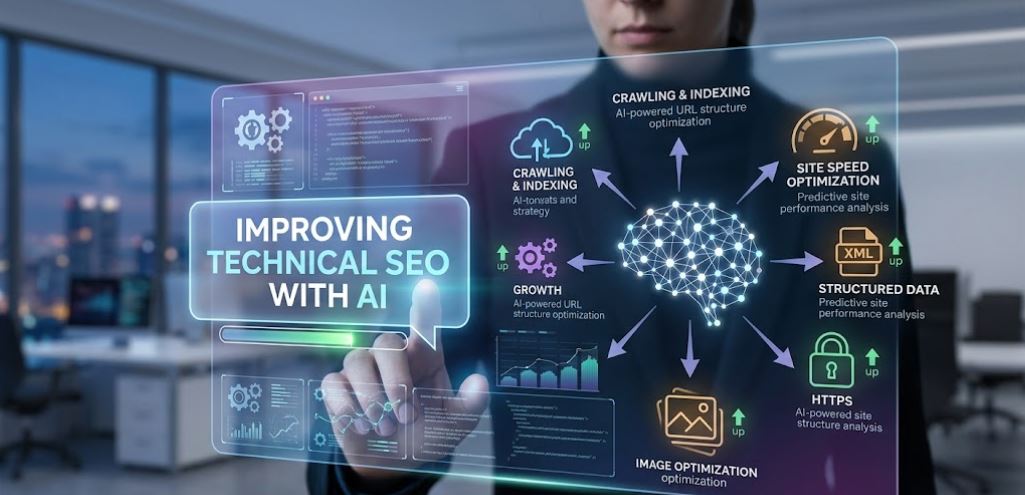
Technical SEO audits can become overwhelming.
Large websites may contain thousands of URLs, redirects, broken links, indexing issues, and crawl inefficiencies.
Reviewing all of this manually takes time.
AI-powered SEO platforms can automatically identify:
Crawl Issues
AI can detect pages that search engines struggle to access.
Indexation Problems
Some pages never appear in search results because they are not indexed correctly.
AI tools can surface these issues quickly.
Internal Linking Opportunities
Many websites unintentionally create orphan pages.
These pages receive little authority because they lack internal links.
AI can recommend relevant linking opportunities based on content relationships.
Duplicate Content Risks
Large websites often contain overlapping content.
AI systems can identify duplication patterns that may dilute rankings.
The benefit is not just efficiency.
It is accurate.
Machines do not get tired after reviewing thousands of URLs.
Real-World Example: SEO Automation at Scale
A useful example comes from a large-scale SEO initiative involving Thermo Fisher Scientific.
Managing thousands of technical product pages across global markets created significant optimization challenges.
An AI-powered SEO automation system helped streamline semantic analysis, structured data optimization, and performance monitoring across a vast website ecosystem. The initiative improved content alignment and visibility while reducing the complexity of managing SEO at scale.
Most businesses are not operating at that scale.
Still, the principle remains relevant.
AI helps organizations manage complexity more effectively.
Whether a website contains 100 pages or 100,000 pages, better analysis leads to better decisions.
Content Optimization Becomes More Strategic
Many marketers use AI solely for content creation.
That approach misses a larger opportunity.
The strongest SEO value often comes from content analysis rather than content generation.
AI can evaluate content against top-ranking competitors and identify areas for improvement.
For example, it may reveal:
- Missing subtopics
- Weak semantic coverage
- Limited expertise signals
- Poor readability
- Incomplete answers to user questions
Consider a healthcare provider publishing a guide on knee pain.
The article may cover symptoms and treatment options.
AI analysis could reveal that top-ranking pages also address recovery timelines, prevention strategies, specialist recommendations, and patient concerns.
Those insights help create more comprehensive content.
The goal is no longer content.
The goal is more useful content.
Search engines increasingly reward pages that thoroughly satisfy user intent.
Predictive SEO: Seeing Trends Earlier
One of AI’s most exciting applications is prediction.
Traditional SEO analysis often focuses on historical performance.
AI can help forecast future opportunities.
By analyzing search behavior, content trends, and market signals, AI systems can identify emerging topics before they become highly competitive.
Think about the businesses that published content about generative AI before the topic exploded.
Many earned substantial organic visibility because they entered the conversation early.
AI makes trend detection more accessible.
It cannot predict the future perfectly.
Nothing can.
But it can identify signals that humans might overlook.
AI Helps Marketers Understand Search Intent
Search intent remains one of the most misunderstood aspects of SEO.
Many businesses target keywords without understanding what users actually want.
A search for “best CRM software” has a different intent than “how CRM software works.”
One query suggests purchasing consideration.
The other suggests research.
AI models can analyze large volumes of search results and categorize intent patterns automatically.
This helps marketers create content that aligns more closely with user expectations.
When content matches intent, rankings often improve naturally.
More importantly, conversion rates improve as well.
The New SEO Reality: Visibility Beyond Rankings
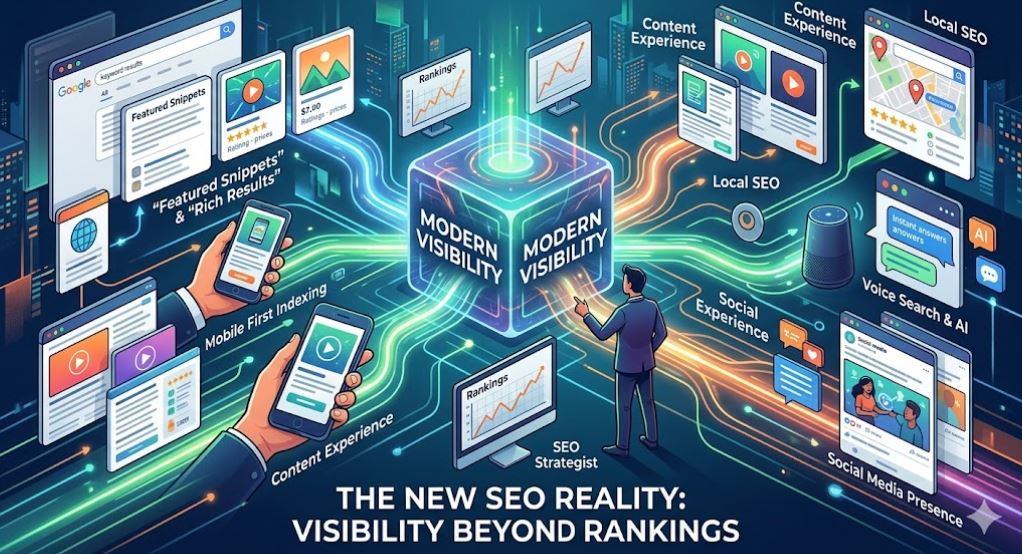
For years, marketers focused heavily on ranking positions.
Position one was the goal.
Today, visibility is more nuanced.
AI-generated search experiences are reshaping user behavior.
Research indicates that AI Overviews appear for a growing percentage of searches, particularly informational queries, while reducing traditional click-through rates for many websites. At the same time, brands cited within AI-generated summaries often receive increased visibility and authority signals.
This changes how SEO performance should be evaluated.
Marketers should measure:
- Brand visibility
- Citation frequency
- Topic authority
- Engagement quality
- Conversion performance
- Organic traffic
Rankings still matter.
They simply are not the only metric that matters anymore.
How Marketing Agencies Are Using AI for Better SEO Results
Many businesses recognize AI’s potential but struggle with implementation.
Owning AI tools is not the same as using them effectively.
Successful agencies combine technology with human expertise.
The tools uncover insights.
The strategists determine what actions to take.
For example, a business searching for a digital marketing agency in Pasadena may find dozens of providers claiming to use AI.
The important question is not whether an agency uses AI.
The important question is how they use it.
Do they apply AI to technical audits?
Do they use predictive analysis?
Can they identify content opportunities faster than competitors?
Technology alone rarely creates results.
Processes and expertise do.
Practical Steps Businesses Can Take Today
Companies do not need enterprise-level budgets to benefit from AI-powered SEO.
Start with these steps:
- Audit existing content using AI-assisted tools.
- Identify content gaps versus competitors.
- Analyze user intent across priority keywords.
- Monitor technical SEO health regularly.
- Track emerging industry topics.
- Review internal linking opportunities.
- Measure visibility beyond rankings alone.
Small improvements often compound into significant gains over time.
That has always been true in SEO.
AI simply helps uncover those opportunities faster.
Final Thoughts
SEO is becoming more data-driven, more competitive, and more complex.
At the same time, businesses have access to better analytical tools than ever before.
AI does not eliminate the need for strategy.
It enhances it.
The organizations seeing the strongest results are not using AI to replace marketers. They are using it to make smarter decisions.
That distinction matters.
The future of SEO will belong to businesses that combine human expertise with AI-powered insights. Those companies will identify opportunities earlier, optimize more efficiently, and adapt faster as search continues to evolve.
For marketers, the challenge is no longer finding data.
The challenge is understanding what the data is trying to tell you.
AI can help answer that question.
Frequently Asked Questions
How does AI improve SEO performance?
AI improves SEO performance by analyzing large datasets, identifying ranking opportunities, detecting technical issues, and uncovering content gaps faster than manual methods.
Can AI replace SEO specialists?
No. AI supports SEO professionals by automating analysis and surfacing insights. Strategic decision-making still requires human expertise.
What are the best uses of AI in SEO?
Some of the most effective applications include keyword research, content optimization, competitor analysis, technical SEO audits, search intent analysis, and trend forecasting.
Does AI-generated content help SEO?
AI-generated content can support content creation, but quality, accuracy, expertise, and user value remain essential for strong SEO performance.
How do agencies use AI for SEO?
Leading agencies use AI to automate data analysis, monitor technical issues, evaluate content performance, identify opportunities, and improve overall SEO strategy.
Is AI changing how businesses measure SEO success?
Yes. Modern SEO measurement increasingly includes visibility in AI-generated search experiences, topical authority, brand mentions, engagement metrics, and conversions alongside traditional rankings and traffic.