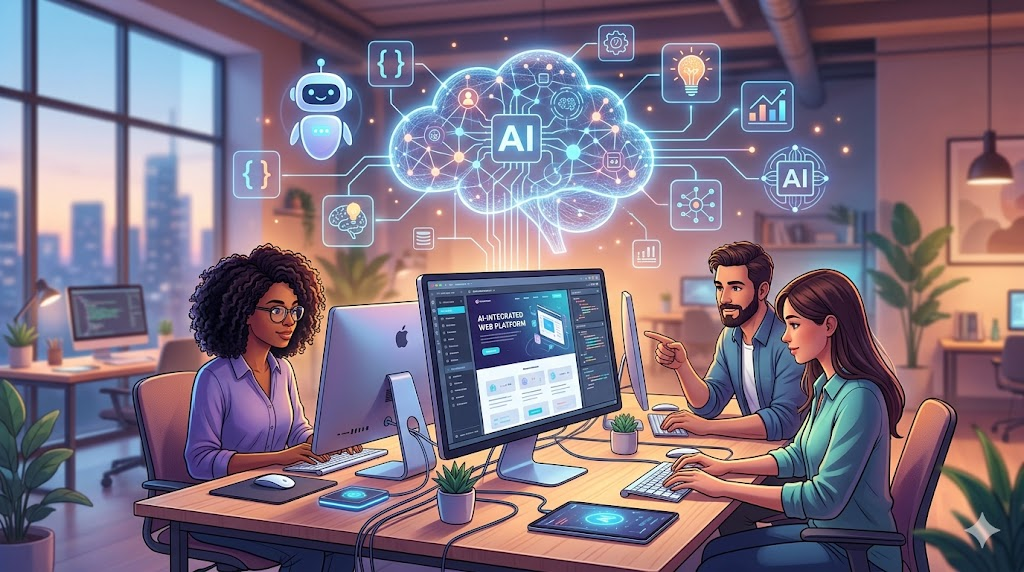
Websites have changed dramatically over the last decade.
Not long ago, a business website functioned like a digital brochure. Visitors landed on a page, read some information, and maybe filled out a contact form. The experience was largely the same for everyone.
That model is fading fast.
Today’s users expect websites to understand their needs, deliver relevant information instantly, and provide seamless experiences across every device. They want speed. They want convenience. Most importantly, they want personalization.
Artificial intelligence is becoming the technology that makes all of that possible.
The future of website development is no longer about building pages. It is about creating intelligent digital experiences that adapt, learn, and improve over time.
For businesses investing in growth, this shift presents both an opportunity and a challenge. Companies that embrace AI-enhanced website development can create stronger customer experiences, improve operational efficiency, and gain a competitive advantage. Those that ignore it risk falling behind.
The interesting part is that AI is not replacing website developers. Instead, it is changing how websites are designed, built, optimized, and maintained.
Let’s explore where website development is headed and what businesses should expect in the years ahead.
Why AI Is Becoming Central to Website Development
Artificial intelligence has quietly moved beyond being a novelty feature.
Today, AI tools assist developers with coding, testing, content creation, user experience optimization, and website performance improvements. Research shows that AI-assisted development has become part of daily workflows for many software teams, helping reduce time spent on repetitive coding tasks while shifting focus toward strategy and quality control.
This evolution is happening because modern websites have become incredibly complex.
Businesses must account for:
- Multiple devices
- Various screen sizes
- Different customer journeys
- Personalized content
- Search engine optimization
- Accessibility requirements
- Security concerns
- Performance expectations
Managing all these variables manually becomes difficult as websites grow.
AI helps solve that problem.
Instead of relying entirely on static rules, websites can now analyze behavior patterns and respond dynamically to user actions.
The result is a smarter digital experience for customers and a more efficient workflow for development teams.
AI-Powered Personalization Will Become the Standard
Think about how streaming platforms recommend content.
Users have become accustomed to personalized experiences in nearly every digital interaction. Naturally, they now expect the same from business websites.
AI-driven personalization is already influencing digital products, and industry forecasts suggest adaptive experiences will continue expanding across workplace and customer-facing applications.
Imagine a visitor arriving on a website for the first time.
Instead of displaying the same homepage shown to everyone else, the website can automatically adjust based on:
- Geographic location
- Device type
- Referral source
- Browsing behavior
- Previous interactions
- Purchase history
A healthcare company might show different content to patients than it does to medical professionals.
A software provider could highlight enterprise solutions for corporate visitors while promoting starter packages to small businesses.
The experience feels more relevant because it is.
And relevance often leads to higher engagement and conversion rates.
AI Will Transform User Experience Design
User experience has always been part science and part intuition.
Designers study behavior patterns, conduct research, and make informed decisions about layouts and navigation. Yet there has always been an element of educated guesswork.
AI is changing that equation.
Modern AI systems can analyze thousands of user interactions and identify patterns that humans might miss.
For example, an AI platform may discover that users frequently abandon a form at a specific field or consistently ignore a call-to-action button in a particular location.
Instead of waiting months for manual analysis, teams can receive immediate insights.
This allows businesses to improve websites continuously rather than relying on occasional redesigns.
Now imagine this process occurring in real time.
A website can automatically adjust layouts, messaging, or navigation based on user behavior patterns. What once required months of testing can happen dynamically.
That level of responsiveness is becoming increasingly achievable.
AI Coding Assistants Are Accelerating Development
One of the biggest shifts is happening behind the scenes.
Developers are increasingly using AI-powered coding assistants to generate code, identify bugs, write documentation, and automate repetitive tasks.
Industry reports suggest AI-assisted coding has become a standard component of many development workflows, helping teams move faster while maintaining focus on architecture and quality assurance.
Consider a common scenario.
A development team needs to build a custom booking system.
Traditionally, developers would spend hours creating foundational code structures before moving to business-specific functionality.
With AI assistance, many repetitive elements can be generated quickly. Developers then focus on strategy, integration, security, and user experience.
The value isn’t merely speed.
The real benefit comes from allowing skilled professionals to spend more time solving meaningful business problems.
Businesses should understand one important detail, however.
Faster development does not automatically mean better development.
AI-generated code still requires human oversight. Experienced developers remain essential for maintaining quality, security, and long-term scalability.
Search Engine Optimization Will Become More Intelligent
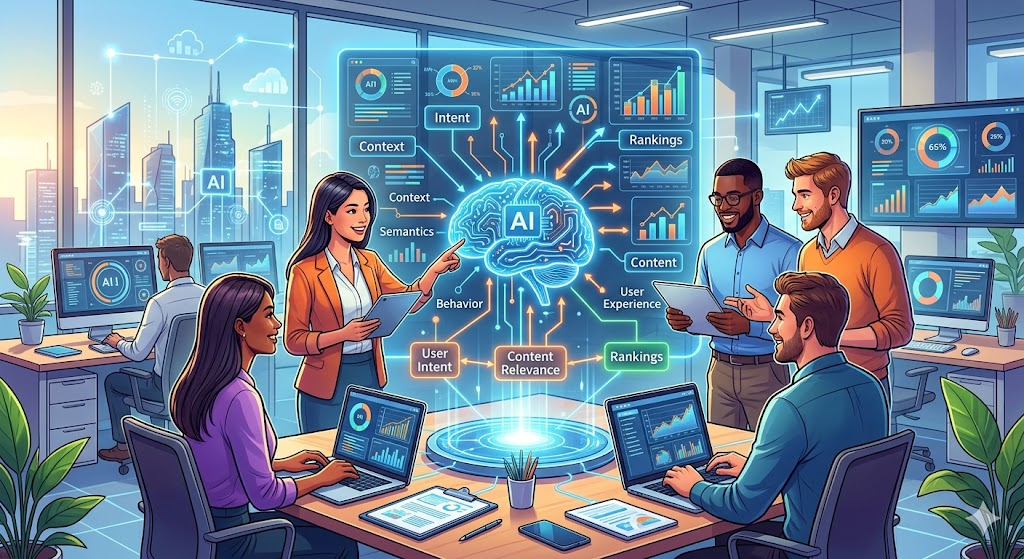
SEO and website development have always been closely connected.
That relationship is becoming even stronger.
Search engines increasingly reward websites that provide useful experiences rather than simply matching keywords.
AI helps businesses understand user intent more effectively.
Instead of focusing solely on ranking for individual terms, websites can create content and navigation structures that answer broader customer questions.
For example, a visitor searching for marketing services may have different needs depending on their business size, industry, or growth stage.
An AI-powered website can identify those signals and deliver content that aligns with the user’s intent.
This creates a better experience while supporting SEO performance.
The future of optimization is less about gaming algorithms and more about understanding people.
Voice Search and Conversational Interfaces Will Expand
Typing is not always the preferred method of interaction.
Voice technology continues to improve, and users are becoming more comfortable speaking to devices.
As a result, websites will increasingly incorporate conversational experiences.
AI-powered chat interfaces can answer questions, guide users through processes, and provide support around the clock.
We’ve already seen this trend in customer service.
The next phase involves integrating conversational experiences throughout the website journey.
Imagine visiting a financial services website and simply asking:
“Which investment option is best for retirement planning?”
Instead of searching through multiple pages, the website provides a tailored answer immediately.
That level of interaction can significantly improve user satisfaction.
Real-World Example: E-Commerce Personalization
Consider a growing online retailer.
Without AI, every visitor receives essentially the same experience.
With AI integration, the website can analyze customer behavior and present personalized recommendations based on previous browsing patterns.
If someone frequently views running shoes, the site can automatically feature related products, training accessories, and relevant content.
This creates a more intuitive shopping experience.
It also helps customers discover products they may not have found otherwise.
Many major retailers have already adopted this strategy because it improves engagement and conversion opportunities.
The principle will continue spreading to businesses of all sizes.
Real-World Example: Predictive Customer Support
Now consider a software company.
Traditional support often begins after a customer encounters a problem.
AI changes that approach.
An intelligent website can detect patterns that suggest a customer may need assistance before they submit a support request.
For instance, repeated visits to troubleshooting pages could trigger proactive guidance.
Instead of reacting to issues, businesses can address them earlier.
Customers receive faster help, and support teams spend less time handling repetitive inquiries.
Everyone benefits.
AI and Website Security
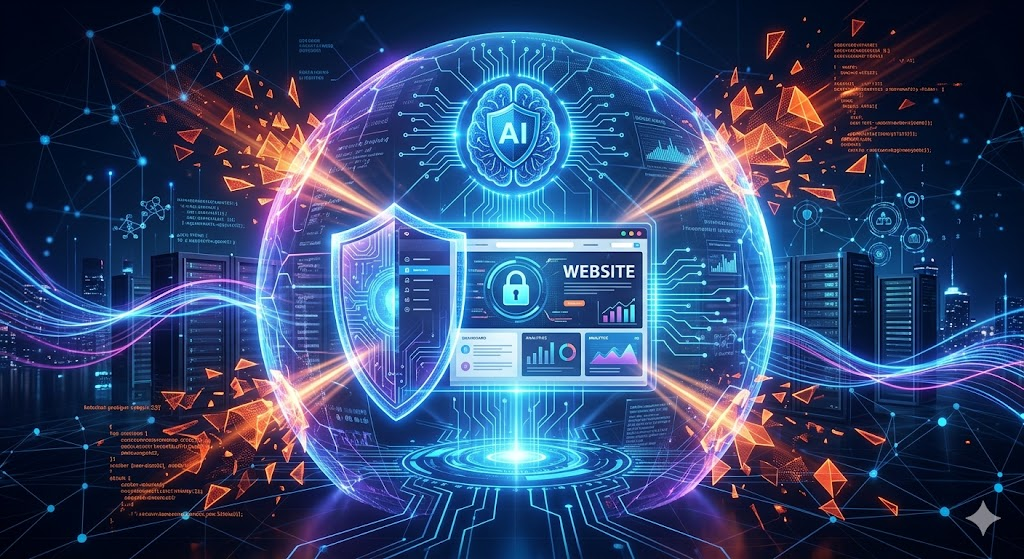
Security remains a major concern for businesses.
Cyber threats continue evolving, and traditional defense methods often struggle to keep pace.
AI offers additional protection by identifying unusual patterns and detecting suspicious behavior.
For example, an AI system might recognize abnormal login attempts or unusual traffic spikes before they become significant problems.
The system can then alert administrators or automatically implement protective measures.
While AI is not a complete security solution, it adds another layer of defense.
That layer will become increasingly valuable as websites handle larger volumes of data and transactions.
The Rise of AI-Driven Content Experiences
Content remains one of the most important elements of digital marketing.
What changes is how that content gets delivered.
Future websites will increasingly use AI to determine:
- Which content appears first
- When content is displayed
- How information is presented
- Which calls to action are shown
Two visitors may see different content experiences even though they land on the same page.
This doesn’t mean businesses should automate everything.
Human expertise still matters.
The strongest results come from combining strategic content creation with intelligent delivery systems.
Think of AI as the distribution engine rather than the storyteller.
What Businesses Should Look for in a Website Development Partner
As AI becomes more integrated into website development, choosing the right partner becomes even more important.
A modern development team should understand more than coding.
They should understand:
- SEO optimization
- User experience design
- Data analytics
- Marketing technology
- AI implementation
- Conversion optimization
Technology alone is not enough.
Businesses need websites that support measurable growth objectives.
This is one reason many organizations seek a digital marketing agency in Pasadena that combines website development expertise with marketing strategy. The most effective websites are not built solely for aesthetics. They are designed to generate leads, improve visibility, and support long-term business goals.
The future belongs to organizations that view websites as business assets rather than standalone projects.
The Human Element Still Matters
Whenever AI enters the conversation, someone eventually asks the same question:
Will AI replace website developers?
The evidence suggests otherwise.
AI excels at automation, pattern recognition, and repetitive tasks. It struggles with creativity, strategic thinking, brand positioning, and nuanced decision-making.
Businesses do not succeed because they deploy technology.
They succeed because they solve customer problems effectively.
Humans remain central to that process.
The future of website development is not human versus AI.
It is human expertise enhanced by AI capabilities.
The companies that understand this distinction will be positioned to create stronger digital experiences than either humans or machines could build alone.
Conclusion
Website development is entering a new phase.
Static websites are giving way to intelligent platforms that learn from user behavior, personalize experiences, automate processes, and continuously improve performance.
AI is accelerating development, enhancing user experiences, strengthening personalization, and helping businesses make better decisions.
Yet technology alone is not the story.
The real opportunity lies in combining AI capabilities with human insight.
Businesses that embrace this approach will create websites that do more than attract visitors. They will build digital experiences that engage audiences, support growth, and adapt to changing customer expectations.
That future is already taking shape.
The question is not whether AI will influence website development.
The question is how quickly businesses will choose to embrace it.
Frequently Asked Questions
How is AI changing website development?
AI is helping developers automate repetitive tasks, improve website performance, personalize user experiences, enhance security, and optimize content delivery. It allows teams to work more efficiently while creating smarter digital experiences.
Will AI replace web developers?
No. AI can assist with coding, testing, and optimization, but human developers remain essential for strategy, problem-solving, creativity, architecture, and quality control.
What are the benefits of AI-powered websites?
AI-powered websites can improve personalization, increase engagement, enhance customer support, optimize conversions, strengthen security, and provide data-driven insights for continuous improvement.
How does AI improve SEO?
AI helps businesses better understand user intent, optimize content strategies, identify performance issues, and deliver more relevant experiences that align with modern search engine expectations.
Should small businesses invest in AI website development?
Yes. Many AI-powered tools are becoming more accessible and affordable. Small businesses can use AI to improve customer experiences, automate processes, and compete more effectively with larger organizations.
What is the future of AI in website development?
The future includes greater personalization, conversational interfaces, predictive analytics, AI-assisted coding, intelligent content delivery, and adaptive user experiences that continuously evolve based on customer behavior.