Social media marketing has never stood still. Every few years, a new platform, algorithm update, or consumer trend forces marketers to rethink their strategy. Today, artificial intelligence sits at the center of that change. Not because it replaces marketers, but because it changes how they work.
A few years ago, creating social content meant brainstorming ideas, writing captions, designing graphics, scheduling posts, and manually reviewing performance. That process could take days. Today, AI can complete many of those tasks in minutes, allowing marketing teams to spend more time on strategy and creative direction.
The shift isn’t about doing less work. It’s about doing better work with smarter tools.
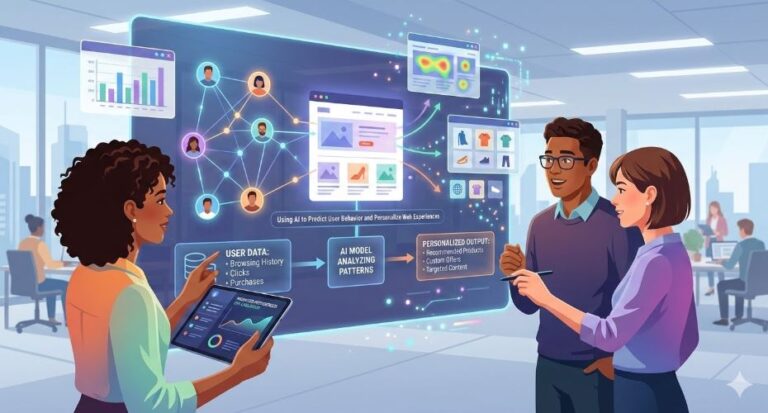
Consumers also expect more from brands. They want personalized experiences, quick responses, and content that feels relevant instead of generic. Meeting those expectations consistently is difficult without technology that can process large amounts of data and uncover patterns people might overlook.
That’s where AI has become valuable. It helps marketers understand audiences, identify trends earlier, create content faster, and optimize campaigns while they’re still running.
Still, technology isn’t a shortcut to great marketing. AI can generate ideas, but it can’t understand a company’s story the way experienced marketers can. The brands seeing the strongest results treat AI as a collaborator rather than a replacement.
For businesses exploring modern marketing solutions, working with a digital marketing agency in Los Angeles that understands both AI and human-centered strategy can make the difference between producing more content and producing content that actually drives business growth.
Why AI Became Essential for Social Media Marketing
Social media has become one of the most competitive marketing channels available. Every day, millions of posts compete for attention across platforms like Facebook, Instagram, LinkedIn, TikTok, and X.
Creating enough quality content to stay visible has become a serious challenge.
AI helps solve several problems at once.
First, brands face increasing content demands. A single campaign might require multiple versions of videos, images, captions, stories, and ads across different platforms. Producing all of that manually takes significant time and resources.
Second, social media algorithms constantly evolve. Engagement signals, audience behaviors, and content preferences shift faster than many businesses can track manually.
AI tools analyze these changes much faster than traditional reporting methods.
Another major factor is personalization.
Consumers increasingly expect brands to recommend products, answer questions instantly, and deliver content that matches their interests. According to McKinsey & Company, companies that excel at personalization generate significantly higher customer satisfaction and stronger revenue growth because they create experiences customers actually value.
This doesn’t happen by guessing.
It happens by analyzing behavioral data at scale.
AI also reduces repetitive work.
Instead of spending hours scheduling posts or organizing campaign reports, marketers can automate routine tasks and focus on creative strategy, audience research, and campaign optimization.
Ironically, AI often gives marketers more time to be human.
Where AI Is Making the Biggest Impact
Artificial intelligence touches nearly every stage of social media marketing. Some applications save time, while others help marketers make better decisions based on data instead of assumptions.
Here are the areas where AI delivers the most practical value.
AI Content Creation
Creating consistent content remains one of the biggest challenges for marketing teams.
Tools like ChatGPT, Claude, and Jasper can generate draft captions, brainstorm campaign ideas, write social posts, suggest hashtags, and even repurpose long-form articles into shorter social updates.
The keyword here is draft.
Experienced marketers rarely publish AI-generated content without editing it.
AI understands language patterns remarkably well, but it doesn’t fully understand brand personality, customer emotions, or current cultural context. That’s why human review remains essential.
Imagine a retail brand preparing its holiday campaign.
Instead of asking a copywriter to begin with a blank page, AI can produce several caption ideas within seconds. The marketing team then selects the strongest concepts, adjusts the tone, adds brand personality, and aligns messaging with campaign goals.
The result isn’t fully AI-generated content.
It’s faster collaboration between people and technology.
This workflow improves productivity without sacrificing originality.
HubSpot’s State of AI research has consistently shown that marketers primarily use generative AI to assist with brainstorming, drafting, and content ideation rather than replacing writers entirely.
That distinction matters.
The most successful teams still rely on human creativity to shape the final message.
AI Image and Video Generation
Visual content has become essential across nearly every social platform.
Brands that publish eye-catching graphics and short-form videos often outperform those relying solely on text updates.
AI-powered creative tools have dramatically shortened production timelines.
Adobe Firefly allows designers to generate background elements, expand images, and create design variations using text prompts. Canva Magic Studio helps marketers resize assets, remove backgrounds, and generate social graphics quickly. Midjourney creates conceptual artwork that designers can refine into campaign visuals.
These tools don’t eliminate designers.
Instead, they reduce repetitive production work.
For example, a marketing team launching a nationwide campaign might need dozens of image variations for Instagram Stories, Facebook Ads, LinkedIn posts, and display campaigns.
Previously, creating those assets could take several days.
Today, AI handles many of the repetitive edits while designers focus on creative direction, brand consistency, and quality control.
That balance leads to faster campaigns without lowering creative standards.
Predictive Analytics
One of AI’s biggest strengths isn’t content creation.
It’s a prediction.
Every social platform produces enormous amounts of engagement data. Likes, comments, shares, clicks, watch time, audience demographics, and conversion metrics all tell part of the story.
The challenge is finding meaningful patterns before opportunities disappear.
Predictive analytics uses machine learning to identify trends hidden inside this data.
Instead of waiting until a campaign ends, marketers can identify which posts are gaining momentum early and adjust their strategy accordingly.
Suppose a software company notices that educational carousel posts consistently generate stronger engagement than promotional graphics.
AI-powered analytics platforms recognize that trend much faster than manual reporting.
The marketing team can then produce more educational content while reducing lower-performing formats.
Small improvements like these often create significant gains over time.
Rather than relying on instinct alone, marketers make decisions supported by evidence.
Perhaps more importantly, predictive analytics helps businesses spend advertising budgets more efficiently.
Knowing which audience segments are most likely to engage allows campaigns to become increasingly precise instead of broadly targeted.
That level of optimization was difficult to achieve only a few years ago.
Now it’s becoming part of everyday marketing operations.
AI-Powered Social Listening
Successful marketing begins with listening before speaking.
Brands have always monitored customer comments, online reviews, and conversations across social media. The difference today is scale.
Thousands of conversations happen every hour. No marketing team can read them all manually.
AI-powered social listening platforms such as Brandwatch, Sprout Social, and Meltwater analyze conversations in real time, helping businesses understand customer sentiment, identify emerging topics, and detect potential reputation issues before they escalate.
Imagine a product launch generating unexpected complaints about a specific feature.
Instead of discovering the issue weeks later through declining sales, AI flags the increase in negative sentiment almost immediately. Marketing and customer service teams can respond quickly, clarify misunderstandings, or coordinate with product teams before the situation grows.
That speed matters.
On social media, public perception can shift within hours. AI gives brands a better chance to respond thoughtfully instead of reactively.
More importantly, social listening doesn’t only uncover problems. It also reveals opportunities. Positive customer conversations often highlight product benefits or use cases that marketers hadn’t considered, providing authentic ideas for future campaigns.
AI-Powered Advertising
Organic reach remains valuable, but paid social advertising continues to drive measurable business results. The difference today is that AI has made ad optimization far more dynamic than it was just a few years ago.
Instead of manually adjusting bids or testing dozens of audience segments, marketers now rely on AI to make many of those decisions in real time.
Meta’s Advantage+ Shopping Campaigns, for example, use machine learning to automatically test audience combinations, placements, and creative variations. Rather than asking advertisers to define every targeting rule, the system evaluates thousands of signals to determine which users are most likely to convert. Meta has reported that many advertisers using Advantage+ Shopping Campaigns have seen improvements in cost per acquisition compared to manually configured campaigns.
Google Ads has taken a similar approach through Smart Bidding and Performance Max. AI evaluates factors such as device type, location, search intent, browsing behavior, and time of day before determining the optimal bid for each auction.
That doesn’t mean marketers can simply switch on automation and walk away.
The best-performing campaigns still begin with strong creative assets, clear messaging, and accurate conversion tracking. AI can optimize delivery, but it can’t fix weak offers or confusing copy.
Think of AI as an exceptionally fast analyst rather than a marketing director. It processes millions of data points in seconds, but people still decide what story the brand wants to tell.
Real-World Examples of AI in Social Media Marketing
Looking beyond the technology itself helps illustrate why AI has become such an important marketing tool. Several global brands have integrated AI into their social media strategies while keeping creativity at the center of their campaigns.
Netflix Personalizes Content Discovery
Netflix has long relied on artificial intelligence to personalize recommendations. While many people associate this technology with its streaming platform, the insights also influence how Netflix promotes new shows across social media.
Instead of promoting identical content to every audience, Netflix tailors promotional assets based on viewing behavior, genres, regional preferences, and audience interests. Someone who frequently watches documentaries may see very different promotional content than someone who prefers romantic comedies.
This personalization keeps engagement high because users receive recommendations that feel relevant rather than random.
Netflix has repeatedly explained its recommendation approach through its Technology Blog, demonstrating how machine learning helps connect viewers with content they’re more likely to enjoy.
Spotify Turns Listening Data into Shareable Moments
Spotify Wrapped has become one of the most anticipated digital marketing campaigns every year.
While it feels playful and personal, it relies heavily on AI and data analysis.
Spotify collects listening behavior throughout the year, then transforms that information into personalized visual summaries users eagerly share across Instagram Stories, Facebook, LinkedIn, and TikTok.
The campaign succeeds because it blends technology with emotion.
AI organizes enormous amounts of user data, but creative storytelling turns those numbers into something worth sharing.
The result is one of the most successful examples of user-generated social media marketing.
Coca-Cola Combines AI with Human Creativity
Coca-Cola has also experimented with generative AI in several marketing initiatives, including its “Create Real Magic” campaign.
Consumers used AI-powered creative tools to produce original artwork inspired by Coca-Cola’s iconic brand assets.
What’s interesting is that Coca-Cola didn’t ask AI to replace creative professionals.
Instead, it invited customers to become part of the creative process while maintaining human oversight throughout the campaign.
That approach reflects a broader lesson many brands are learning.
The strongest campaigns don’t choose between AI and people.
They combine both.
What AI Still Can’t Replace
Every new technology sparks predictions about replacing entire professions. Marketing has experienced that conversation more than once.
Yet the companies seeing the best results with AI generally agree on one point.
Human judgment remains essential.
AI can generate hundreds of caption ideas, but it doesn’t understand why one story resonates emotionally while another falls flat.
Brand voice offers another example.
Most successful brands sound remarkably consistent over time. Customers recognize that voice because it reflects company values, culture, and personality.
AI can imitate tone.
It can’t genuinely develop one.
Crisis communication presents an even bigger challenge.
Imagine a customer service issue becoming a trending topic overnight.
An AI-generated response might sound grammatically perfect, yet completely miss the emotional sensitivity the situation requires.
Experienced marketers know when to pause scheduled campaigns, adjust messaging, or simply listen before responding.
Those decisions rely on judgment rather than prediction.
Creativity also remains deeply human.
AI learns from existing patterns.
People create entirely new ones.
The next memorable campaign often begins with an unexpected idea that no algorithm would have predicted.
Common Mistakes Businesses Make When Using AI
AI delivers impressive capabilities, but it also creates new opportunities for mistakes.
One of the biggest problems is publishing AI-generated content without editing it.
Readers quickly recognize generic language.
If every post sounds similar, audiences lose interest regardless of how frequently a brand publishes.
Another common mistake involves prioritizing quantity over quality.
Some businesses assume producing more content automatically leads to better results.
In reality, social media algorithms increasingly reward relevance and engagement instead of sheer volume.
Over-automation creates another issue.
Scheduling tools, chatbots, automated replies, and AI-generated captions certainly improve efficiency. However, when every customer interaction feels automated, brands begin to lose authenticity.
Businesses also sometimes trust AI recommendations without questioning them.
Data should inform decisions, not replace critical thinking.
Marketing still requires experimentation, customer feedback, and creative intuition.
Finally, many companies overlook governance.
AI tools should follow clear brand guidelines covering tone, accuracy, copyright, and fact-checking. Without those standards, inconsistencies eventually appear across campaigns.
Practical Steps for Businesses
For companies beginning their AI journey, the goal shouldn’t be to automate everything at once. Start with the areas where AI removes repetitive work while allowing your team to focus on higher-value activities.
Consider these practical steps:
- Use AI to brainstorm content ideas, but have experienced marketers refine every final draft.
- Automate reporting so teams spend more time analyzing results than compiling spreadsheets.
- Test AI-generated visuals while maintaining consistent brand guidelines.
- Use predictive analytics to improve campaign decisions instead of relying only on intuition.
- Monitor customer conversations through AI-powered social listening tools to identify trends early.
- Regularly review AI outputs for accuracy, brand voice, and compliance before publishing.
- Measure results continuously and adjust your strategy based on real performance data.
Businesses that treat AI as a decision-support tool—not a replacement for marketing expertise—often achieve more sustainable growth.
Final Thoughts
AI is changing social media marketing in meaningful ways. It helps marketers work faster, uncover valuable insights, personalize customer experiences, and optimize campaigns with greater precision.
At the same time, successful marketing still depends on qualities machines cannot replicate completely: creativity, empathy, strategic thinking, and authentic storytelling.
The brands leading today’s digital campaigns understand this balance. They use AI to strengthen their marketing processes while relying on experienced professionals to shape strategy, protect brand identity, and build genuine customer relationships.
For organizations exploring AI-driven marketing, partnering with a digital marketing agency in Los Angeles that understands both emerging technology and human-centered marketing can help transform AI from a productivity tool into a lasting competitive advantage.
Frequently Asked Questions
How is AI changing social media marketing?
AI helps marketers automate repetitive tasks, analyze audience behavior, personalize content, optimize advertising campaigns, and generate creative ideas more efficiently. Rather than replacing marketers, AI enables teams to make faster, data-informed decisions while spending more time on strategy and creativity.
What AI tools are commonly used for social media marketing?
Popular AI tools include ChatGPT and Claude for content creation, Canva Magic Studio and Adobe Firefly for visual design, Meta Advantage+ for advertising optimization, Google Ads AI for campaign management, and Brandwatch or Sprout Social for social listening and sentiment analysis.
Can AI replace social media managers?
No. AI can automate content generation, reporting, scheduling, and data analysis, but it cannot replace human creativity, brand storytelling, strategic planning, or crisis communication. Successful marketing still depends on experienced professionals who understand audience behavior and business goals.
Does AI improve social media engagement?
AI can improve engagement by helping marketers publish more relevant content, identify the best posting times, personalize messaging, and optimize audience targeting. However, engagement ultimately depends on delivering valuable content that resonates with real people.
Is AI-generated content good for SEO?
AI-generated content can support SEO when carefully reviewed and edited by experienced writers. Search engines prioritize helpful, accurate, and original content rather than content created solely through automation. Human oversight remains essential for maintaining quality and credibility.
What are the biggest risks of using AI in marketing?
Common risks include publishing inaccurate information, losing a consistent brand voice, over-automating customer interactions, producing generic content, and relying too heavily on AI without human review. Businesses should establish editorial guidelines and fact-check AI-generated content before publishing.
How do marketing agencies use AI?
Many agencies use AI to streamline research, content ideation, campaign reporting, predictive analytics, advertising optimization, and social listening. Rather than replacing marketers, AI improves efficiency and supports better decision-making throughout the marketing process.
Should small businesses invest in AI for social media?
Yes. Even small businesses can benefit from AI by saving time on content creation, improving audience targeting, analyzing campaign performance, and responding to customer inquiries more efficiently. Starting with a few well-chosen AI tools often delivers meaningful improvements without requiring a large budget.