
There are a number of factors that clearly indicate the staying power of local search engine optimization. Consider the failed deal between Google and Yelp. Although by now most are well aware of the fact that it fell through, the fact that Google had even considered purchasing the review site is a sign that the search giant is taking the idea of local search seriously. Additionally, there was the relatively recent news that Google’s AdWords was testing a flat rate pricing model for local ad pricing, a move obviously made to help translition smaller, local businesses to their search. And, if nothing else, there’s the simple fact that Google’s Local Business Center is continually growing as a service.
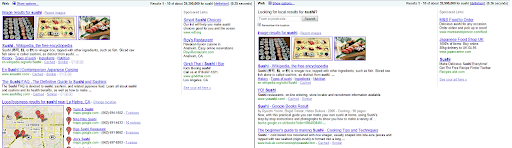
Perhaps one of the nicer side benefits of local search engine optimization is the fact that it’s a comparatively simpler process compared to the usual search engine optimization. Gone are the numerous keyword tools, time being spent trying to figure out the validity of one data set compared to another, and recreating of sites after discovering that the keyword data used to build it was no good. Instead, employing tools such as Google Trends, Google Insights, and PPC campaings give you a fairly decent general idea of what keywords should be incorporated into your business’ advertising.
Because of this, the process of embarking on a local search engine optimization campaign will likely differ from the more typical search engine optimization. Centering it around a strategy which involves Google’s AdWords Keyword tool, and compounding it with Google Insights and Google Trends gives you data more usable on its own that it has the chance to be with general SEO, and it becomes fairly simple to do well on search engine result pages (SERP) so long as your client’s site provides content that’s valuable and relevant to the local community.
Although it’s highly unlikely that the amount of traffic driven to a business from such a campaign will be at all comparable with a large, national company, it’s important to keep sight of the fact that we’re dealing with local businesses. Because local search engine optimization is a relatively new venture, its SERPs are readily available to be capitalized on.
Written by Kenny K.