Here’s a scenario: A bored 20-year old guy wants to know where’s the best restaurant in the city to hang out for a while on a Saturday night that offers cold beer and pizza? He opens his browser and launches Google on his phone. He fervently types the word in the search engine box. After a short wait, he then scrolls the page to scan the search results. Now, question… Did he simply type in the word, “Pizza”, the phrase, “best pizza place to hang out”, or “bistro with cheese pizza and beer in Manhattan”?
In utilizing the power of the World Wide Web for a successful online marketing, regardless if you own a small start-up company or a big-time brand, choosing the best set of keywords for your campaign is very crucial in optimizing your company website. And while most business owners brave the keyword battle with companies that use the same exact keywords, little did they know that long tail keywords are equally useful and efficient, especially if researched and managed properly. This results in less competition, higher conversion rate and lesser unqualified traffic.
It’s Like Giving a Straight Answer
Using long tail keywords is like giving a straight answer. Here’s another concrete example, suppose you type in the word, “pizza and beer”, Google will give you all search results pertaining to the said keyword, ranging from news about pizza, pizza brands, pizza recipes, pizza’s nutritional facts, pizza delivery, how to manage a pizza restaurant, and so on and so forth –when all you want to know is where’s the best place in Manhattan to go for a pizza and beer.
Somehow, using exact or head keywords doesn’t serve its purpose of being “exact”, as it tends to give a broad range of results that users doesn’t need. As for marketers, head keywords may give them the traffic that they’re expecting; however, it does not necessarily convert into sales. On the other hand, long tail keyword is all about specificity. Sure, it may lead to lower rates in traffic, but it assures higher chances of getting a more relevant conversion rate. Using the “pizza” example above, that particular sports bar in Manhattan will be more likely to serve that hungry and bummed customer who just wants a slice of New York Pizza and a mug of cold beer.
Everyone Else Is Using the Exact Keyword, So Why Should I Go For Long Tail?
Precisely! In contrast with head terms, using long tail keyword narrows down your competition. This way, the search terms used on the search engine sifts the population to a much condensed results, making the coverage of a general search into a customer-specific target. Take for instance, those pizza lovers, whom are using the vague word, “pizza” to look for a restaurant that serves cheese pizza. With the long tail “pizza & beer while watching a football game in Manhattan” search, the results using this set of terms become more concise and intended for catering to a particular niche market: Those pizza-loving sports enthusiasts of New York City, thus eliminating the inclusion of other pizza lovers that are not much of a sports fan.
Knowing the Right Set Of Words to Use in Formulating a Long Tail Keyword
Research is the key factor to determine the perfect terms to use for your long tail keyword. In doing this, you must consider and relate your choice of words based on the customers you are targeting. To be more effective, ask yourself as if you are a customer looking for a pizza place. From there, study your chosen terms by using Google, itself. Simply type in some of the relevant keywords you think would fit to your specific offering.

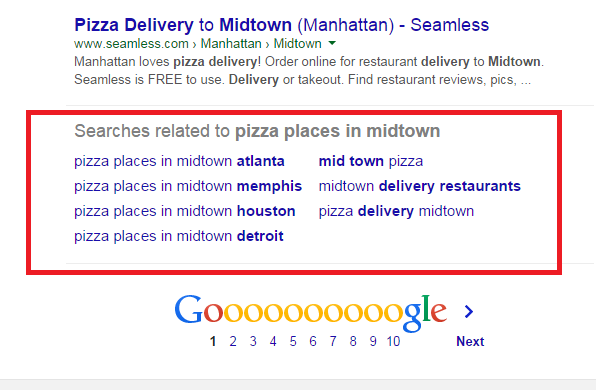
Another Google method is to scroll down and analyze the suggested results at the bottom of the results page to formulate variations of phrases that fits well with your business.
Furthermore, you may use keyword analyzer tools such as Google Adwords to determine the number of searches made as well as the level of competition with other establishments that are using the same set of words. Consider using negative keywords as well to remove insignificant keywords that may include your business to search results that you most likely don’t need or included in your offer, which may get you an unqualified traffic. This will greatly help in reducing unnecessary cost per click when incorporating long tail in your campaign, particularly in your PPC ads.
To sum up, it looks as though the use long tail keywords is becoming more and more substantial when it comes to efficient internet marketing, as people are now inclined to be more specific and direct in using search engines. And with the evident stiff competition that we see online, it is pretty much safe to say that longer is better.